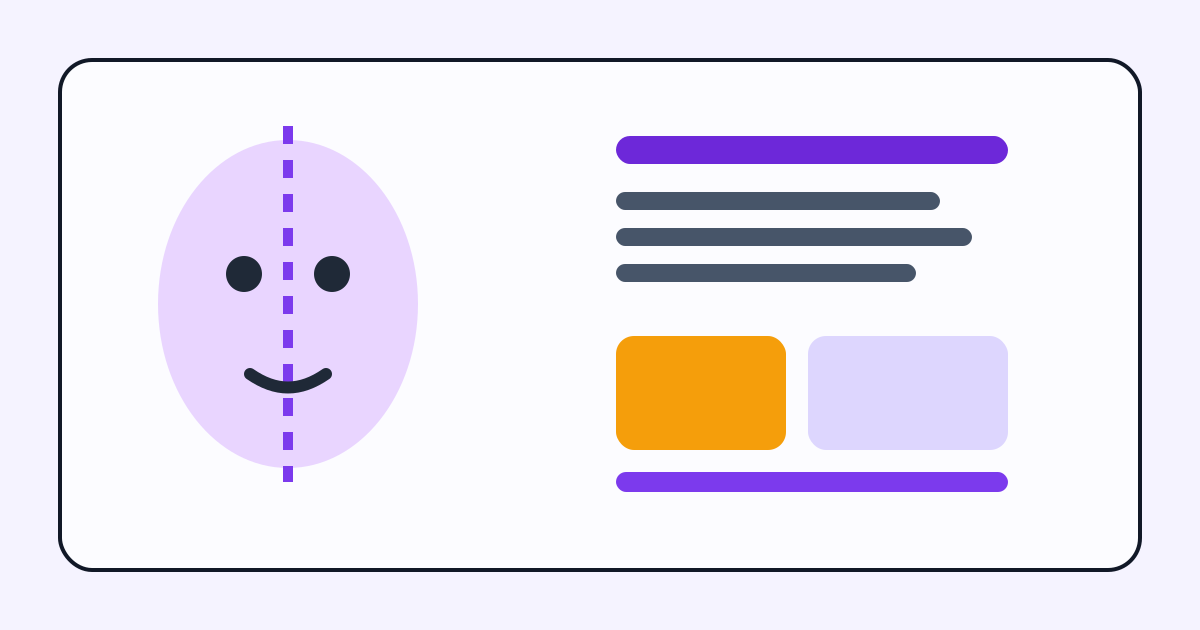
Face Symmetry in Photos: What AI Notices and What It Gets Wrong
How face symmetry shows up in photos, why cameras exaggerate small differences, and why AI should not be treated as an absolute judge.
Face symmetry gets mentioned constantly in attractiveness discussions, but it is often misunderstood. Real faces are not perfectly symmetrical, and cameras can exaggerate small differences that barely matter in person.
That is especially important if you are using an AI face score. Models can notice symmetry-related patterns in a photo, but they are still judging an image, not your full real-life presence.
What symmetry actually means in a photo
In practical terms, symmetry in photos is affected by:
- Head turn
- Lens distance
- Lighting direction
- Expression
- Hair and accessories
A slight tilt, one raised eyebrow, or light hitting one side harder can make the image look less balanced, even if your face is completely normal.
Why cameras exaggerate asymmetry
A camera turns a 3D face into a 2D frame. Small differences become more noticeable when:
- The light is harsh.
- The camera is close.
- The face is angled unevenly.
- One eye is more relaxed than the other.
- The jaw is tight.
This is one reason a single bad selfie can feel much harsher than the mirror.
What AI can reasonably pick up
An AI tool may be useful for noticing broad photo patterns such as:
- Whether the face is presented clearly
- Whether one side is lost in shadow
- Whether the angle makes the face look compressed
- Whether styling or hair is changing the read of the face
That can be helpful.
What AI gets wrong when people over-interpret it
Problems start when people turn a photo score into a theory about permanent attractiveness.
AI cannot tell you:
- Your real-life presence
- How expressive you are in motion
- Whether someone finds you compelling in person
- What changes after grooming, posture, or confidence improve
It also cannot perfectly separate facial structure from image conditions.
A healthier way to use symmetry feedback
If a photo seems "less balanced," test the setup before you test yourself:
- Use softer front-facing light.
- Increase camera distance.
- Keep the face closer to neutral.
- Reduce glare, shadows, and messy framing.
Then compare again.
That is where an AI face analysis comparison can help. Use it to learn what changes the image. Do not use it as a final ruling on your face.
The point is not to become perfectly symmetrical. The point is to make the photo read more clearly and more kindly.
更多文章
Are Am I Ugly Tests Accurate? What They Measure and What They Miss
What am i ugly tests can realistically evaluate, where they fail, and how to interpret an AI face score without over-trusting it.

Best Am I Ugly Test? What to Look For in an AI Face Analysis Tool
How to judge whether an am i ugly test is actually useful, and which signals matter more than a dramatic score.

Free AI Face Analysis: What You Can Learn Before Paying for a Full Report
What a free AI face analysis preview should tell you, what it should not pretend to know, and how to decide whether a full report is worth it.
邮件列表
加入我们的社区
订阅邮件列表,及时获取最新消息和更新